A new study led by our marine biologist Ginevra Boldrocchi in the frame of the M.A.R.E. Project, has recently been published in the prestigious international scientific journal Nature.
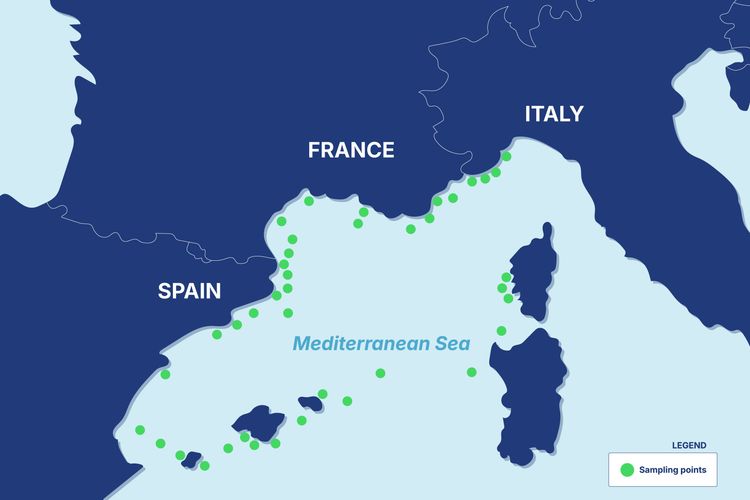
The study analyzes samples collected from 40 sites distributed along one of the most anthropized areas of the Mediterranean basin, providing a quantitative and spatially extensive assessment of the state of marine contamination. The results fill an important gap in environmental monitoring and represent an important baseline for future control programs and integrated environmental quality management strategies.
Main results of the study:
PCBs (polychlorinated biphenyls): All zooplankton samples contained PCBs, which are widespread chemical pollutants. The highest levels were found near Marseille, Barcelona, and the mouth of the Ebro River, which are highly urbanized and industrialized areas.
DDT: The presence of DDT was lower and mainly derived from historical contamination, i.e., past use in agriculture or mosquito control. The highest concentrations were found along the French coast and near Barcelona.
Metals and other elements: All samples contained metals such as mercury, lead, cadmium, copper, and zinc. The highest levels were observed in densely populated or industrial areas, and near rivers such as the Rhône, Orb, Aude, and Hérault, where past activities may still be affecting the environment.
This work represents a fundamental step towards understanding the distribution and impact of pollutants along the marine food chain. The data collected provides a solid scientific basis for supporting policies for the protection, monitoring, and sustainable management of the Mediterranean.